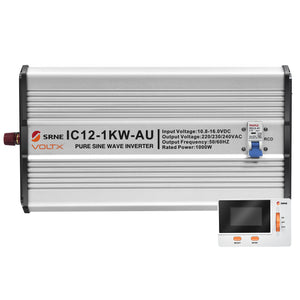
![VoltX 12V 1KW Pure Sine Wave Inverter + FREE VoltX Inverter LCD Display]() 20% OFFSee details
20% OFFSee detailsVoltX 12V 1KW Pure Sine Wave Inverter + FREE VoltX Inverter LCD Display
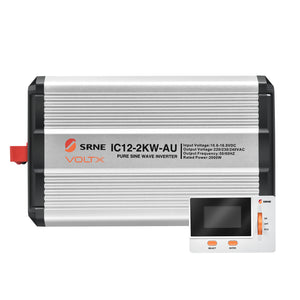
Was$499.00Now $399.20 Get 20% OFF by adding the promo-code FINALS20 to your cartUnit price /Unavailable![VoltX 12V 2KW Pure Sine Wave Inverter + FREE VoltX Inverter LCD Display]() 20% OFFSee details
20% OFFSee detailsVoltX 12V 2KW Pure Sine Wave Inverter + FREE VoltX Inverter LCD Display
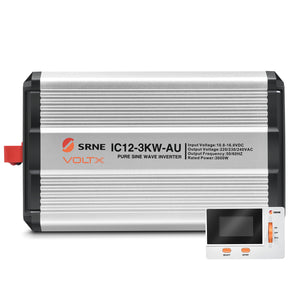
Was$599.00Now $479.20 Get 20% OFF by adding the promo-code FINALS20 to your cartUnit price /Unavailable![VoltX 12V 3KW Pure Sine Wave Inverter + FREE VoltX Inverter LCD Display]() 20% OFFSee details
20% OFFSee detailsVoltX 12V 3KW Pure Sine Wave Inverter + FREE VoltX Inverter LCD Display
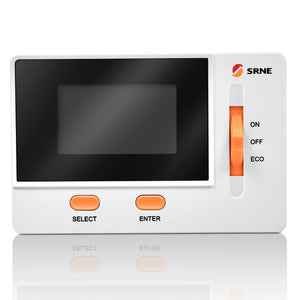
Was$869.00Now $695.20 Get 20% OFF by adding the promo-code FINALS20 to your cartUnit price /Unavailable![VoltX Inverter LCD Display]() 20% OFFSee detailsWas
20% OFFSee detailsWas$69.00Now $55.20 Get 20% OFF by adding the promo-code FINALS20 to your cartUnit price /Unavailable![Deye 48V 6KW Hybrid Solar Inverter MPPT Charger Regulator Low Voltage]() 20% OFFSee details
20% OFFSee detailsDeye 48V 6KW Hybrid Solar Inverter MPPT Charger Regulator Low Voltage
Was$2,499.00Now $1,999.20 Get 20% OFF by adding the promo-code FINALS20 to your cartUnit price /Unavailable![Deye 48V 5KW Hybrid Solar Inverter MPPT Charger Regulator]() 20% OFFSee details
20% OFFSee detailsDeye 48V 5KW Hybrid Solar Inverter MPPT Charger Regulator
Was$2,199.00Now $1,759.20 Get 20% OFF by adding the promo-code FINALS20 to your cartUnit price /Unavailable![Deye 48V 12KW Hybrid Solar Inverter MPPT Charger Regulator Low Voltage]() 20% OFFSee details
20% OFFSee detailsDeye 48V 12KW Hybrid Solar Inverter MPPT Charger Regulator Low Voltage
Was$6,699.00Now $5,359.20 Get 20% OFF by adding the promo-code FINALS20 to your cartUnit price /UnavailableVery low stock![Deye 48V 8KW Hybrid Solar Inverter MPPT Charger Regulator Low Voltage]() 20% OFFSee details
20% OFFSee detailsDeye 48V 8KW Hybrid Solar Inverter MPPT Charger Regulator Low Voltage
Was$3,899.00Now $3,119.20 Get 20% OFF by adding the promo-code FINALS20 to your cartUnit price /UnavailableLow stock
Are you an RV owner making use of solar power during your travel? Or are you an avid camper using a portable camping generator as your main source of electricity? Whichever one you are, you’re probably no stranger to inverters and how they help power your essential appliances.
An inverter mainly converts direct current (DC) into alternating current (AC), which is the kind of output suitable for powering most appliances. Whether you're getting power from a battery, a solar panel setup, or a generator, you need this to plug in your portable appliances and devices safely.
Inverters are also a useful addition to small houses such as off-grid shelters. They're available in lots of power shops too, with Enerdrive inverter and Victron inverter being some of the most popular names in the market. Here at Outbax, we are also offering solar inverters-hybrid types to be exact-to give you multiple functions in a single device.
A hybrid inverter works both as a power converter and a charger. It's basically a fusion of an inverter, solar charger, and battery charger in handy form. This is the modern way of powering up at home or outdoors and is often used to compensate for weak grids or a complete lack of electricity.
How To Choose An Inverter?
Before you go on shopping for an inverter, it's best to know what options you have and how they are different from each other. This is especially important if you're a first-time buyer. There are several types of inverters plus, they come in a variety of wattages and voltages as well. You could go for a 12V inverter, a 2000 watt inverter, a 48V one and so on!
Let's start with power output, which can be classified into two-surge power and typical power. Surge refers to the maximum power an inverter can supply in a short time, usually when the appliance is starting up. Typical power, meanwhile, pertains to the inverter's continuous rating and is usually much lower than the surge. This concept is actually not at all new as tons of generators have these ratings as well.
In terms of type, inverters are classified into 3 major kinds: Sine wave, modified sine wave, and square wave. Here's a little guide about them to help you pick out which one suits you best:
Sine Wave Inverters
This is the most popular and recommended type of inverter-it’s actually what you get from your local utility company, which also means it's compatible with all electronic equipment sold on the market. In fact, there are some motors, chargers, and appliances that will only produce full output with pure sine wave power. The only downside of this is that it's the most expensive type and costs around twice as much as other types.
Modified Sine Wave
Modified sine wave inverters produce decent output but can have issues with efficiency at times. This is a common problem with appliances requiring increased power such as motors, fridges, and pumps. There are more considerations with buying this type of power inverter when it comes to compatibility with appliances. You also have to take into account that it can be noisy and can impact how some of your devices run such as clocks and timers.
Square Sine Wave
These may be the cheapest type, but most of the time not very useful as they can only run simple devices like tools with universal motors. This is also why you will seldom see square sine wave inverters anymore, given that everything is advancing to fit the constant technology upgrades.
How Much Inverter Power Does My RV Need?
So you love travelling around in your RV. If you're currently thinking of pairing a battery bank and inverter, you should size both properly first. Now, estimating your RV's power need is not complicated. A lot of inverters in the market range between 1000W to 5000W and an RV usually requires an output somewhere in the middle.
To easily have an idea of what size inverter you'll need, add up the largest number of watts you'll be using plus your desired runtime and add 20% to it. Let's say you need around 1500W to use a computer and an electric cooker. Total the 1500W and 300W (20% of 1500) and you get 1800 watts. This means you need a medium-sized, probably 2000 to 3000W inverter to power your vehicle's appliances.
Of course, you should also consider other factors, including your battery type and capacity for maximum efficiency. Here's a pro tip: Lithium batteries such as LiFePO4 batteries are the best power packs you can pair with most inverters because of their overall quality and increased capacity. A 100Ah lithium battery for every 1000W of inverter capacity is usually the most recommended pair, especially when used to power an RV.
What Makes Outbax Inverters Stand Out?
As mentioned earlier, Outbax specialises in hybrid power inverters. You get multiple functions in one, plus, these are able to combine a solar power system with a battery-based inverter for increased efficiency.
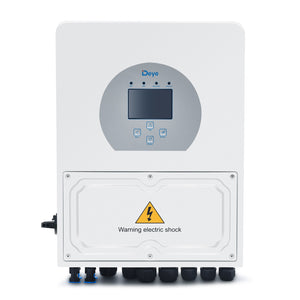
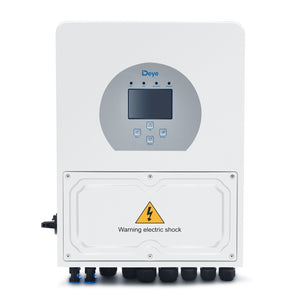
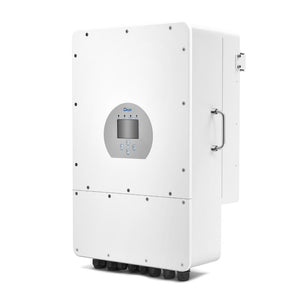
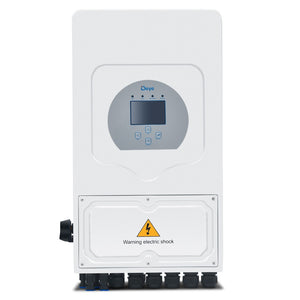
All our inverters are also feature-packed. For instance, our 5kW 5000W Hybrid Solar Inverter is backed by a 48V low-voltage battery for safe, reliable use. It also allows 6 periods of battery charge/discharge process and supports energy storage from diesel generators as well.
Need something with a higher output? Check out our 6000W and 8000W Hybrid Solar Inverters! They will give you the massive capacity to run more essentials and have the same signature features that all our inverters have. These include a colourful touch LCD screen, an IP65 water-resistant rating, a unique smart load application and more!
Aside from inverters, Outbax specialises in other portable power sources as well such as lithium deep cycle batteries, solar panels, inverter generators, and power stations. We love the outdoors as much as you do, and aim to provide you with quality products at an affordable price.
Visit our website the next time you plan an adventure. Whether you're in need of RV solar panels or local batteries, you're sure to find something here without having to break the bank!
Frequently Asked Questions
- What are the best solar panels to buy for a home?
- Can I run my whole house on solar power?
- How long do solar panels last?
- What is the difference between a hybrid inverter and a regular inverter?
- Do I need a battery for my home solar system?
- What maintenance do home solar systems require?
- Can I install a home solar system myself?
- How does a solar system work on cloudy days?
- What is an MPPT charge controller?
- What are portable solar panels used for?
- How do I choose the right size portable solar panel?
- What's the difference between a solar panel kit and a solar blanket?
- Do I need an Anderson plug for a portable solar panel?
- Are these solar panels waterproof?